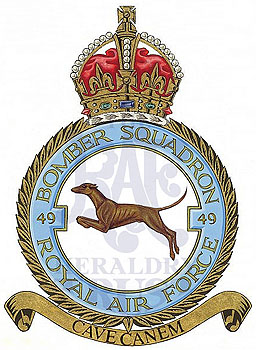
49 Squadron
Memorial Locations
Memorials (7)
Avro Lancaster PB432
Bransby Hampden Memorial
Dry Doddington Lancaster Memorial
Hameldown Hampden Memorial
HP Hampden P1206
HP Hampden X3027 - plaque
Skegness Hampden Memorial
Aircraft Types
Lancaster, Hampden — Squadron code: EA-
Squadron History
No. 49 Squadron RAF was formed on 15 April 1916 at Swingate Down, Dover, as a training unit before deploying to France in November 1917 as a day bomber unit flying DH4s and DH9s. Reformed in 1936, the squadron was the first unit to receive the Handley Page Hampden, and in WW2 flew Hampdens, briefly Avro Manchesters, then Avro Lancasters from June 1942 until the end of the war. The squadron's defining moment came on 12 August 1940 when Flight Lieutenant Roderick Learoyd attacked the Dortmund-Ems Canal at 150 feet under intense fire, earning the first Victoria Cross awarded in Bomber Command. The squadron participated in major operations including the Le Creusot raid, Peenemünde (losing 4 of 12 Lancasters), the Battle of Berlin, D-Day support, and the final bombing raid of the war on Berchtesgaden on 25 April 1945. Post-war, the squadron flew Avro Lincolns (including operations against Mau Mau in Kenya) before converting to Vickers Valiants as part of the V-bomber force. In 1957, 49 Squadron dropped Britain's first megaton-range nuclear weapon during Operation Grapple at Christmas Island. The squadron disbanded in 1965 when the Valiant fleet was withdrawn.
Commanding Officers
Notable Personnel
Awarded for the attack on the Dortmund-Ems Canal, 12/13 August 1940. Flying a Hampden at 150 feet above the canal under searchlights and intense cannon fire, Learoyd placed his bombs squarely on the target. He returned on one engine with hydraulic damage, circling Scampton until daylight before landing. The first Victoria Cross awarded in Bomber Command.
Captained Valiant XD818 on 15 May 1957 to drop Britain's first megaton-range nuclear weapon off Malden Island during Operation Grapple. All five crew received the Air Force Cross.