Manea Halifax Memorial
Manea, Cambridgeshire
Help us verify this location. This memorial's position is not yet precisely confirmed. If you have local knowledge, photographs, or documentary evidence of the exact site, we'd love to hear from you.
Photographs
Location
Manea, Cambridgeshire, Cambridgeshire
what3words: ///weeps.cheaper.crumples
Aircraft & Operation Details
Crew
Detailed Record
Compiled from heritage archives and aviation records. Source links provided below for original materials.
Operation: Karlsruhe, Germany
Date: 24/25th April 1944 (Monday/Tuesday)
Unit: No. 76 Squadron (Resolute)
Base: RAF Holme-on-Spalding Moor
Location: near Welney, Norfolk.
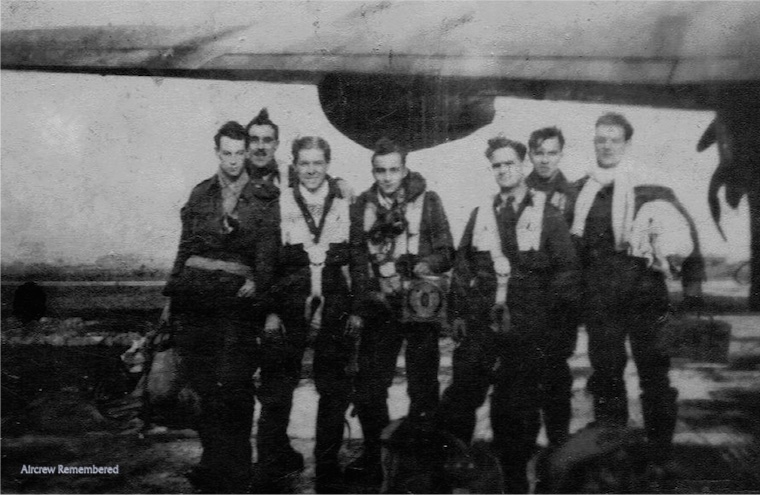
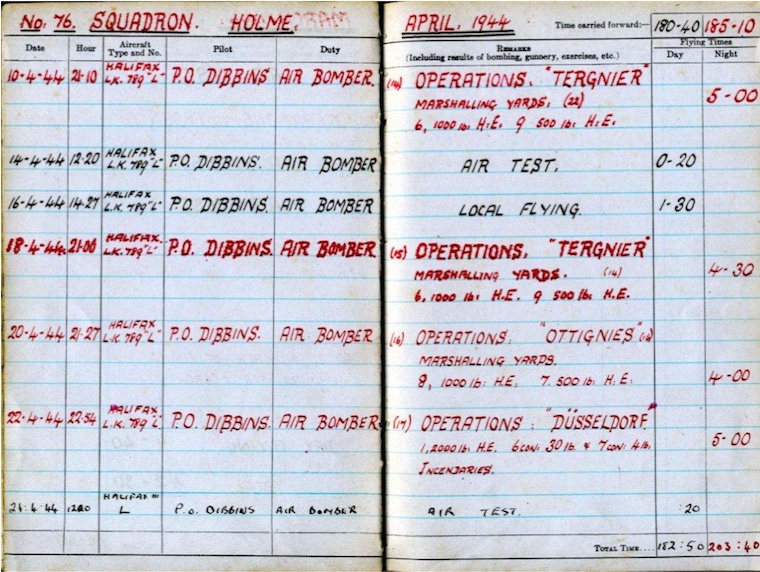
Pilot: P/O. Douglas Robert Dibbins 171730 RAFVR Age 21. Killed
Fl/Eng: Sgt. Gerard John Head 1801075 RAFVR Age 20. Killed
Nav: Sgt. Kenneth Craven Oswald 1493028 RAFVR Age 22. Killed
Air/Bmr: Fl/Sgt. John Raymond Bathe 1395700 RAFVR Age 30. Killed
W/Op/Air/Gnr: Sgt. James George Davenport 1337654 RAFVR Age 21. Killed
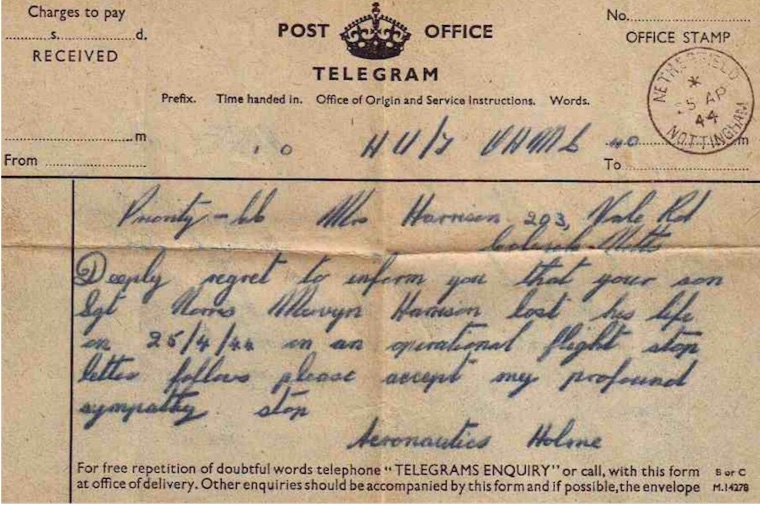
Air/Gnr: Sgt. Norris Mervyn Harrison 1819564 RAFVR Age 19. Killed
Air/Gnr: Fl/Sgt. John Anderson 1573409 RAFVR Age. 20. Injured
This page of remembrance is dedicated to my uncle Sgt Norris Meryvn Harrison and the crew of a Halifax bomber of RAF 76 Squadron who were killed on the 25th April 1944. Michael Harrison.
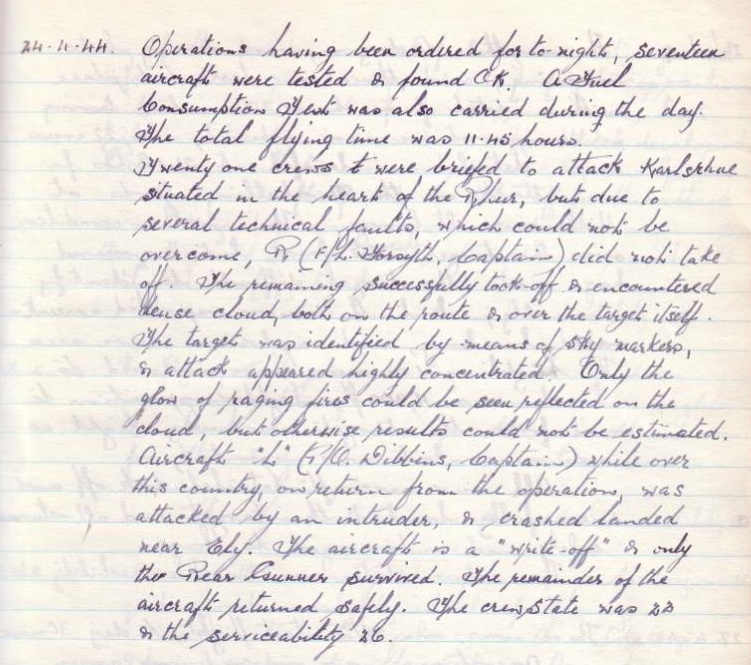
Took off from Holme-on-Spalding Moor at 22:09 hrs to attack Karlsruhe. 637 aircraft took part in the raid made up from; 369 Lancasters, 259 Halifaxes and 9 Mosquitoes. A total of 19 aircraft, 11 Lancasters, 8 Halifaxes were lost (1 from 76 Squadron) 3% of the force. According to reports, cloud over the target and a strong wind which pushed the Pathfinders too far north, spoiled this attack. The markers appeared to be very scattered, consequently the bombing was not concentrated.
However many large fires were seen reflected through the cloud and several explosions were also observed. Enemy fighter activity was also handicapped owing to the 10/10th cloud, and the ground defences were ineffective. Only the northern part of Karlsruhe was seriously damaged and most of the bombs fell outside the city.
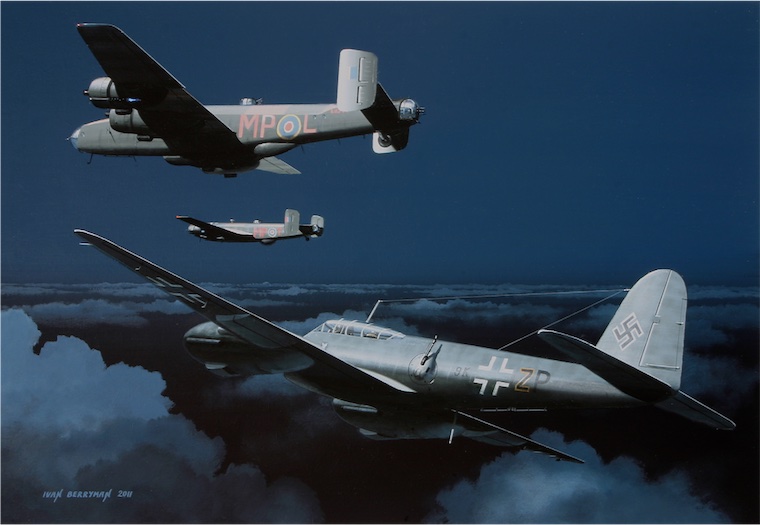
Later as the main force recrossed the English coast, enemy intruder aircraft were patrolling over Eastern England. Halifax LK789 was attacked by a Me410 flown by Lieutenant Wolfgang Wenning of II./KG51 at a height of 1,000 mtrs, 20km NE of Cambridge. During the attack, another 76 Squadron Halifax; LK785 T-Topsy piloted by Lieutenant Carl Larsen RNAF was flying on the right hand side of the bomber. The following eye witness account is by Sgt H.W Kirtland the wireless operator onboard T-Topsy.
Investigation of Halifax LK789 crash site by Jeff Carless, East Anglian Aircraft Research Group. We did make some enquiries regarding the crash of the Halifax when researching in the Welney area, we found a couple of people that knew of it. One was in bed at his house on the drove opposite to Colony Farm and was woken by cannon shells falling on the roof. He recalled that the aircraft crashed in the field opposite Colony Farm. It was described as having crashed flat rather than diving into the ground. Two of the engines were in that field and the other two ended up further down the drove. Both he and the other witness recalled that one of the crew survived the crash.
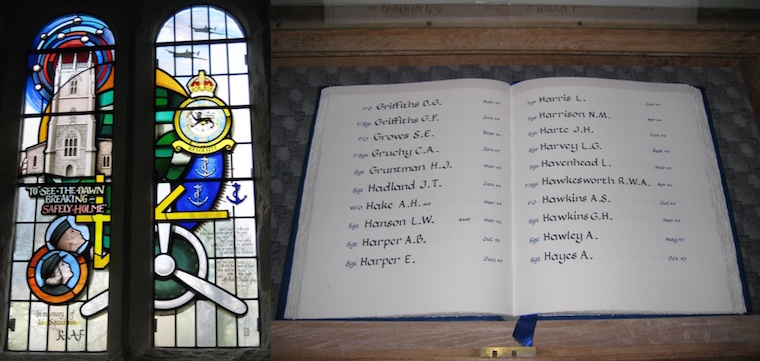
The Squadron badge is shown in the right-hand side of the window and below it are shown three anchors. These are a reminder of the losses suffered during action against the German capital ships:- Scharnhorst, Gneisenau and Tirpitz. All Saints Church itself is depicted in the left-hand light, with the red beacon shining from the tower against a lightening night sky, in which are shown a handful of stars.
The main central area of the design is composed of two large interlinked circles. The upper edge of the top circle represents the sun rising, ("dawn breaking"), and the lower edge of the lower circle is marked as for a compass rose. The central area represents the landscape of Yorkshire, in which the Church sits, for the airfield of Holme-on-Spalding Moor, and for which (as part of our country) our armed forces fought and in some cases lost their lives. At the top of the right-hand light are shown two Halifax bombers returning from Operations, guided in over the early morning fields towards the airfield by the red beacon.
The Hercules radial engine is shown at the base of the right-hand light and balancing on the left, the up-turned faces of two ground- crew, awaiting the returning aircraft.
The words " TO SEE THE DAWN BREAKING - SAFELY HOLME" (this is the title of the Squadron's History) are shown between the Church and their faces. The yellow lines in the lower half of each light depict the runways of the airfield.
P/O. Douglas Robert Dibbins. Bristol (Canford) Cemetery, Sec SG Grave 253.
Memorial Details
Memorial Care
Local Contacts
These local organisations are connected to this memorial and may be able to help with information or visits.
Local remembrance and memorial support
Local authority responsible for memorial upkeep
Further Reading
IWM War Memorials Register entry for the RAF Halifax LK789 memorial near Manea, Cambridgeshire.
IWM memorial reference 97988
Local community page documenting the Halifax LK789 crash and memorial, with news updates about the site near Manea village.
Local community involvement in memorial upkeep
BAAA archive entry confirming six killed in the crash of Halifax III LK789 near Manea. The aircraft was built at the Fairey Engineering factory at Stockport and delivered to 76 Squadron on 22 February 1944.
Built at Fairey Engineering, StockportDelivered to 76 Sqn 22 Feb 1944Halifax III variant confirmed
Sources
- Geograph Cambridgeshire(website)
Credits & Acknowledgements
Nearby Memorials
Do you have additional information, photographs, or corrections for this record? We welcome contributions from researchers, families, and local communities.
Suggest a correction or additionCan You Help Complete This Record?
This record for Manea Halifax Memorial is partially complete. We’re looking for additional details such as crew information, photographs, narrative history, or source references.
Email admin@bombermemorial.co.uk or contribute directly via our GitHub repository


