Halifax LW696 Engine Memorial Pavilion, Daubhausen
Daubhausen, Ehringshausen municipality, Lahn-Dill-Kreis, Hesse, Germany
Photographs
The Memorial
Could you help us fill in the inscription?
Location
Daubhausen, Ehringshausen municipality, Lahn-Dill-Kreis, Hesse, Germany, Hesse
What Happened
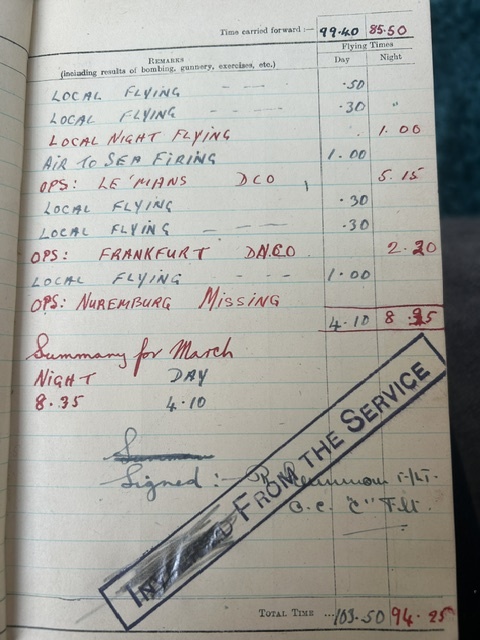
On the night of 30/31 March 1944, Halifax LW696 (MP-X) of 76 Squadron left RAF Holme-on-Spalding-Moor for Nuremberg. The raid became the worst single night in Bomber Command's history: bright moonlight on the long straight leg across Hesse gave the German nightfighters their most destructive night of the war. At about 00:40, over the village of Daubhausen, LW696 was attacked and set on fire by Oberleutnant Martin Becker of NJG 6 in a Bf 110. The bomber exploded in the air with its full load aboard — around fifty 15kg high-explosive bombs and over five hundred magnesium incendiaries. Wreckage fell just north and east of the village; the only building hit was the Kunz family's barn, which burned down. The village itself, as its memorial panel records, 'escaped catastrophe by the narrowest of margins'.
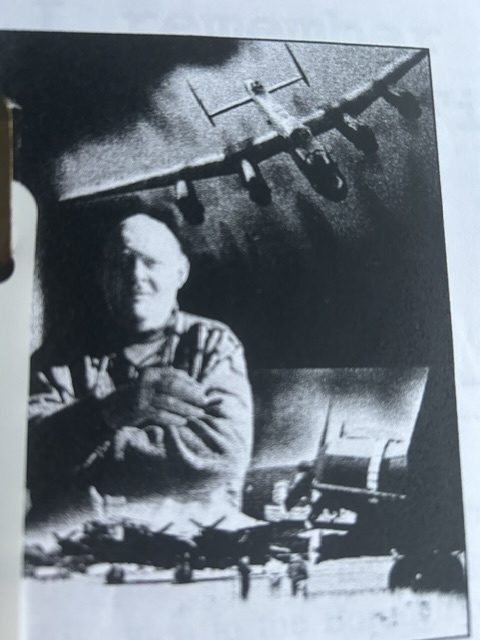
One man escaped the aircraft: air gunner Sgt Guy Leonard Edwards, who parachuted to safety and spent the rest of the war as a prisoner. The pilot, Squadron Leader Kenneth Arthur Clack DFM of Harrow Weald, Middlesex, was killed at just 21 and lies with his crew in a collective grave at Hanover War Cemetery. His headstone reads: 'Age 21 / All he had, / All he hoped, he gave.'
Sixty years later the villagers went looking for the aircraft. One of its Hercules engines had buried itself four metres deep in a meadow and resisted early recovery attempts; a working group of eyewitnesses located and raised it in July 2005, and local firms built the pavilion where it now sits.
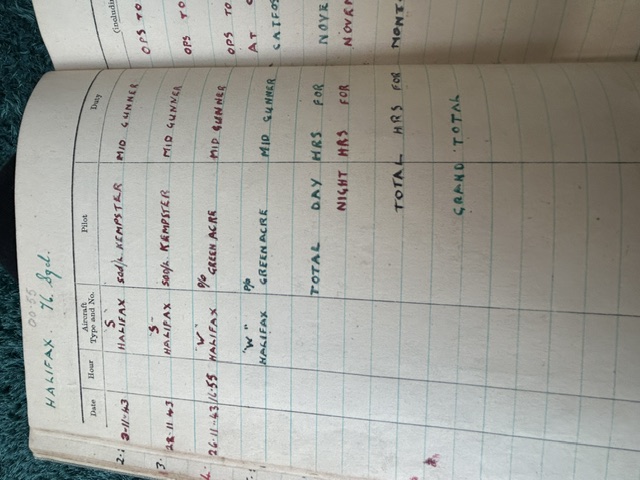
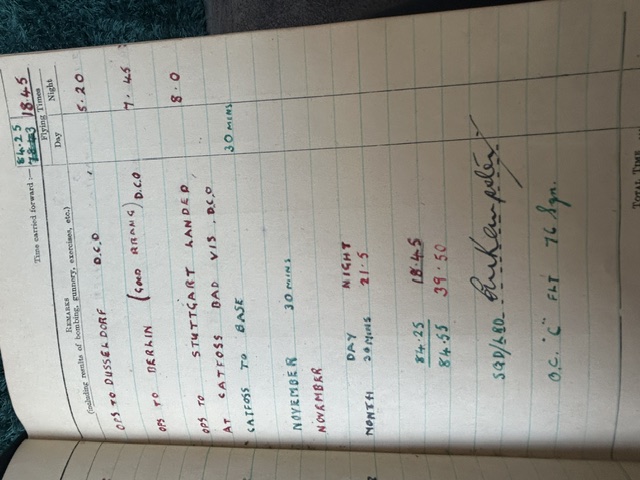
In October 2026, Edwards's daughter Jackie Simpson contacted the Register. She holds his original flight logbook, which names the crew aboard that night. She shared what her father had carried for the rest of his life: the day after he was shot down, the Germans brought him back to the crash site to identify his friends. The crew had only one parachute between them, and they gave it to him because he was the youngest, just twenty years old. The carrier pigeon that all bombers carried also died. Edwards survived the war but, his daughter says, the memories haunted him. He died in October 2006, a year before the village inaugurated the memorial pavilion.
Community Connection
The memorial exists because Daubhausen's own eyewitnesses built it. In 2003 a working group of villagers who remembered the night as children resolved to find the buried engine. Local firms raised it, built the display stand, and constructed the pavilion. The bilingual panel was inaugurated on 31 March 2007, the 63rd anniversary. In October 2026 the sole survivor's daughter contacted the Register holding his original flight logbook. Her father, Sgt Guy Edwards, was twenty years old when his crew gave him their only parachute. He survived the war but never escaped the memory. He died in October 2006, one year before the village unveiled the pavilion. The logbook names the crew he flew with that night. A German village that built a memorial from living memory, and a British family that carried the same night for eighty years, are now connected through this page.
Story
Remembrance
Do you know of any commemorative events or annual services held at this memorial? We would love to hear from local communities who remember.
Share remembrance informationAircraft & Operation Details
Crew (8 members)
About the Crew
From Harrow Weald, Middlesex
From Lake Alma, Saskatchewan
Sources
Do you have additional information, photographs, or corrections for this record? We welcome contributions from researchers, families, and local communities.
Suggest a correction or addition